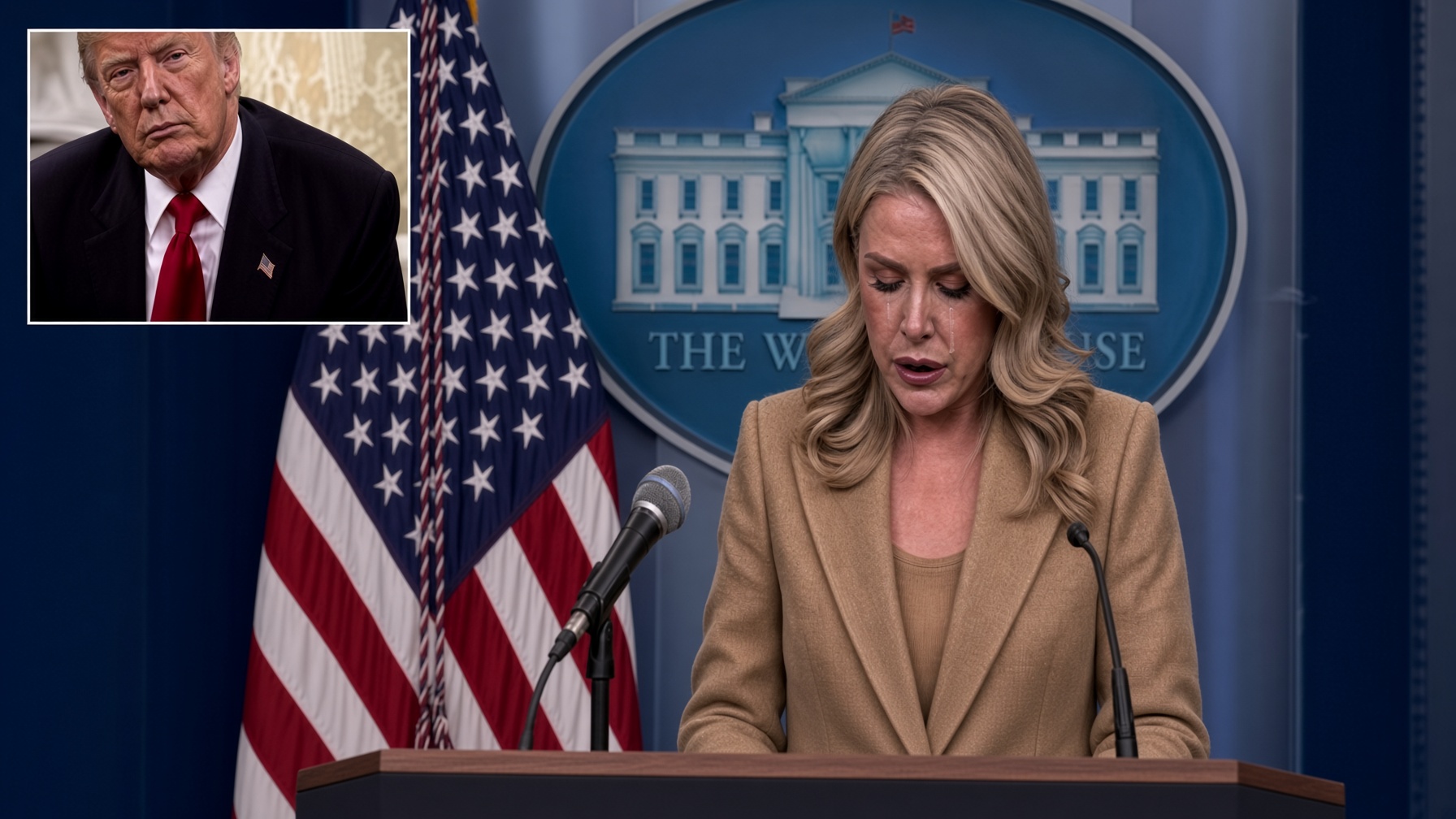
WASHINGTON — White House Press Secretary Karoline Leavitt defended the Trump administration’s changes to presidential press access during a discussion with Axios co-founder Mike Allen, arguing that the revised approach is designed to broaden participation across the media industry rather than restrict journalists.
The remarks came amid an ongoing dispute over who determines which news organizations receive access to President Donald Trump during events with limited space, including Oval Office appearances and presidential travel. The changes have raised questions about the relationship between the White House, established media organizations and the White House Correspondents’ Association (WHCA), which traditionally coordinated the presidential press pool.
Speaking at an Axios event in Washington, Leavitt rejected the suggestion that the administration’s policies represented restrictions on journalism.
“I don’t view them as restrictions,” Leavitt said, arguing that the White House was seeking to provide access to “more outlets, more voices, more news, journalists and outlets.”
Her defense reflects the administration’s broader argument that presidential coverage should account for a changing media landscape in which traditional newsrooms increasingly share audiences with digital publishers, independent reporters and online commentators.
Leavitt Challenges the Traditional Press-Pool System
The presidential press pool is a small group of journalists selected to cover events when it is impractical to accommodate the entire White House press corps. Pool reporters gather information, take notes and share their observations with other news organizations, helping ensure that the president’s activities can be covered even when access is restricted by space or security requirements.
For decades, the WHCA played a central role in coordinating pool assignments and rotating participation among eligible news organizations. Under Trump’s second administration, however, the White House press office assumed a greater role in deciding which outlets would participate.
Leavitt questioned why a single organization should retain a recurring place in the pool.
“Why should a single outlet have the privilege of being in that 13-person press pool every single day?” she asked.
The administration has argued that changing the selection process creates opportunities for organizations that have historically received less direct access to the president. The revised approach has also included efforts to give independent journalists and newer media outlets a greater presence in White House briefings and events.
When Leavitt began serving as press secretary in January 2025, she announced that two briefing-room seats would be made available to what she described as “new media voices.”
The initiative reflects a broader effort to recognize digital publications, podcasters and other media figures whose audiences may not be reached primarily through traditional television networks, newspapers or wire services.
Associated Press Dispute Intensifies the Debate
The controversy over press access has been sharpened by the administration’s dispute with the Associated Press.
The White House restricted AP access to certain presidential events after the news organization declined to adopt the administration’s preferred name, “Gulf of America,” for the body of water traditionally known as the Gulf of Mexico.
The AP argued that the restrictions were retaliatory and violated its First Amendment protections. The dispute became a prominent test of how much discretion the executive branch has when determining which news organizations may cover the president in limited-access settings.
U.S. District Judge Trevor McFadden ordered the administration to restore AP’s access on terms comparable to those afforded to other news organizations, according to reporting on the litigation. The legal dispute raised broader questions about whether government officials can condition access on a newsroom’s editorial decisions or terminology.
The administration has maintained that access to particular events is not an unlimited constitutional entitlement and that officials must retain authority to manage attendance in settings where space and security are constrained.
Press advocates, meanwhile, have warned that giving government officials greater control over the selection process could weaken the independence of journalists covering those officials.
A Media Landscape in Transition
Leavitt framed the administration’s policy as a response to changes in how Americans consume news.
Traditional broadcasters and newspapers now compete with digital-native publications, independent reporters, podcasts and social-media creators. Some newer outlets have built substantial audiences without operating through the conventional newsroom structures that shaped White House coverage for generations.
“It’s not about ideology,” Leavitt said. “It’s about increasing the wide array of outlets that have access.”
Supporters of the administration’s approach argue that established organizations should not automatically receive preferred access simply because they have historically occupied particular positions. They say broader participation could bring additional perspectives into presidential coverage.
Critics counter that expanding representation should not mean allowing political officials to choose reporters based on their perceived friendliness, viewpoint or willingness to adopt administration-preferred language. They argue that transparent, consistent selection standards are important to maintaining public confidence in the independence of White House reporting.
The central disagreement is therefore not simply about which outlets receive seats. It concerns how those seats are allocated and what safeguards should exist to prevent access decisions from becoming a means of rewarding or penalizing news organizations.
Presidential Communication Styles Compared
The Axios discussion also touched on differences in how recent presidents have engaged with the press.
An Axios analysis published in July 2024, drawing on data compiled by presidential scholar Martha Joynt Kumar, compared formal press conferences and interviews conducted by recent presidents. By June 30 of his fourth year in office, President Joe Biden had participated in 164 such events, compared with 468 for Trump and 570 for Barack Obama at the corresponding point in their presidencies.
Those figures measured formal press conferences and interviews, rather than every interaction between a president and journalists. Informal exchanges, brief question-and-answer sessions and other encounters may not have been counted in the same way.
The comparison illustrates that presidents use different communication strategies, but the number of formal appearances alone does not establish how accessible an administration is or how effectively journalists can scrutinize its decisions.
Press Access Debate Continues
The debate over Leavitt’s approach is likely to continue as the White House develops its media strategy and news organizations challenge decisions they believe limit fair access.
The administration says its changes will make presidential coverage more representative of today’s diverse media environment. Traditional news organizations and press advocates argue that selection procedures must also protect editorial independence and prevent the government from exercising undue influence over who can ask questions and report on presidential activities.
Both sides recognize that the media industry has changed significantly. The unresolved question is how to adapt long-standing press procedures without undermining the independence that allows journalists to hold public officials accountable.
As the dispute continues, the White House faces pressure to explain its selection standards, while journalists and press organizations continue to debate the appropriate balance between the government’s responsibility to manage access and the public’s interest in independent reporting.
Ultimately, the controversy reflects a larger challenge for American journalism: determining how access to the presidency should be distributed when the definition of a news organization is expanding, but the need for transparent and impartial coverage remains.